
How I Used a Personal Habit Tracker to Improve My Daily Life
Improving my quality of life didn’t start with a dramatic change. It started with paying more attention to the small things I do every day.
- How much did I sleep?
- Did I exercise?
- Did I read?
- Did I eat well?
- Did I spend time learning something new?
- Did I work on something that matters to me?
- And, perhaps most importantly, how did I actually feel?
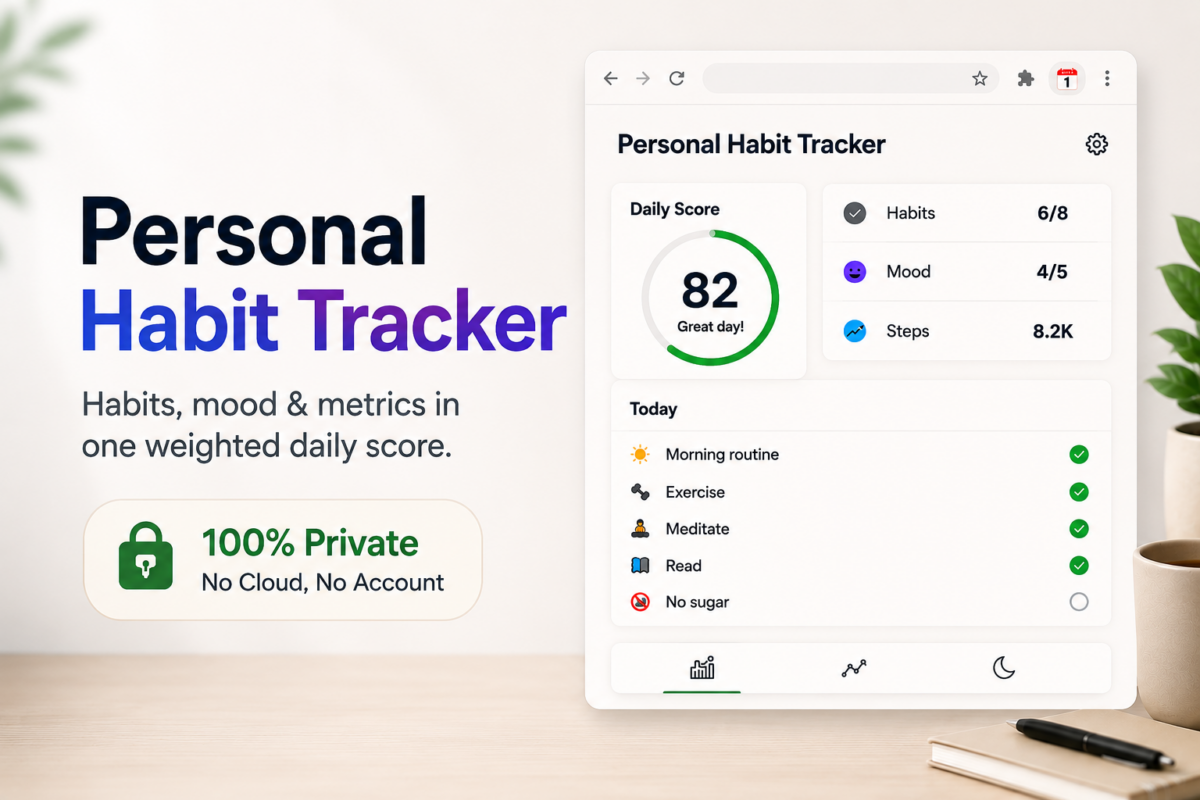
I started using Personal Habit Tracker to keep track of these small daily decisions and to understand whether I was actually developing the habits I wanted in my life. What I discovered was that tracking wasn’t really about collecting data. It was about becoming more aware of how I was spending my days.
I Wanted to Improve Both My Body and My Mind
When people talk about improving their lives, it’s easy to think in terms of big goals.
- Get in shape.
- Learn a new skill.
- Read more books.
- Become more productive.
- Sleep better.
- Be healthier.
The problem is that these are outcomes, not actions. I can’t wake up in the morning and tick a box that says “be healthier.” But I can exercise. I can eat something healthy. I can go for a walk. I can get enough sleep. Similarly, I can’t simply decide to “become more knowledgeable.” But I can read today. I can study. I can spend an hour learning something new instead of scrolling through my phone. I started using Personal Habit Tracker to turn these bigger goals into small actions I could actually repeat every day.
Choosing the Habits That Actually Matter to Me
One of the first things I did was think about which behaviours would genuinely improve my life if I repeated them consistently. Not what somebody on social media says I should do. Not a list of 30 “habits of successful people.” My habits. For example, I can track things such as:
• Exercise
• Reading
• Meditation or breathing exercises
• Eating healthy food
• Working on a side project
• Learning something new
• Making the bed
• Getting up at a reasonable time
• Going to bed on time
I can also record measurable things such as my sleep, weight and daily steps. This gave me a simple framework. Instead of asking myself: “Did I have a productive day?”
I could look at what I actually did.
Tracking Made Me More Honest With Myself
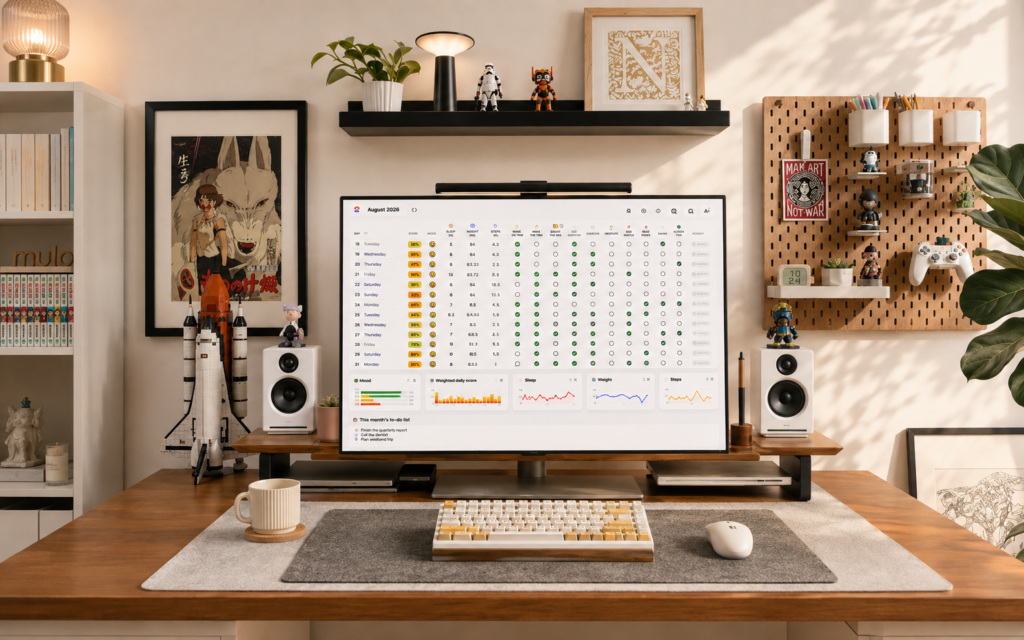
This was probably one of the biggest benefits. Our perception of our own behaviour isn’t always particularly accurate. I might think: “I’ve been exercising quite a lot recently.” Then I look at the tracker and realise I exercised three times in the last two weeks.
Or I might feel like I’ve had a terrible week, but when I look at the data, I realise that I slept well, exercised, read several times and made progress on things that mattered to me. The tracker doesn’t care how I remember the week. It shows me what happened. That little bit of objectivity has been surprisingly useful.
I Stopped Treating Every Habit as Equally Important
Another thing I like about Personal Habit Tracker is the ability to give habits different weights. Because realistically, not every habit has the same impact. Making my bed might be a nice way to start the morning. Exercise may have a much greater impact on my physical and mental wellbeing. Reading for an hour might contribute more toward my long-term goals than completing some tiny routine.
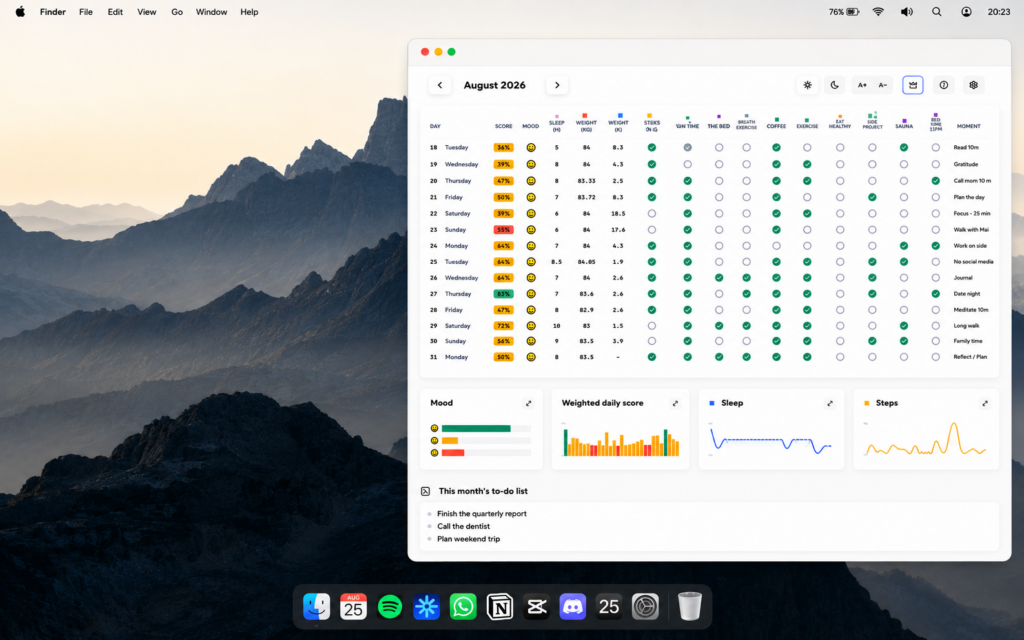
So instead of simply counting how many boxes I ticked, the tracker calculates a weighted daily score. The habits that matter more can contribute more to that score. This gives me a simple number that represents how closely the day matched the priorities I’ve set for myself.
The Daily Score Became a Simple Feedback Mechanism
I like being able to look at a day and see a score. Maybe today was 82%. Yesterday was 65%. Another day was 91%. But I’ve learned not to obsess over individual numbers. A low score doesn’t mean I had a bad day. And a high score doesn’t automatically mean I had a great one.
Instead, I use the score as feedback. What becomes interesting is the pattern. If my scores gradually improve across several weeks, I’m probably becoming more consistent. If they start falling, I can look at what’s changed.
The score makes something abstract — “Am I doing well with my habits?” — much easier to understand.
I Don’t Try to Get 100% Every Day
This has been important. Habit tracking can easily become counterproductive if every unchecked box feels like failure. Real life doesn’t work like that. Some days I’m busy. Some days I’m tired. Sometimes priorities change. Sometimes I simply don’t want to exercise. And occasionally sitting on the sofa doing absolutely nothing might be exactly what I need. So my objective isn’t: Get 100% every day. It’s: Increase the number of good days over time. That small difference makes habit tracking feel much healthier to me. I’m looking for direction, not perfection.
Tracking My Mood Added Another Dimension
One of the things I particularly wanted to understand was the relationship between what I do and how I feel. Personal Habit Tracker lets me record my mood alongside my habits and metrics. It takes only a moment. Over time, this gives me another layer of information.
For example, I can start asking: Do I generally feel better during periods when I exercise more? How does poor sleep affect my mood? Are my better days associated with particular routines? Are there periods where I’m doing everything “right” but still don’t feel particularly good? I don’t need to draw conclusions from every correlation I see. The value is simply being able to notice patterns.
Sleep Became Much Harder to Ignore
Sleep is a good example of something I knew was important but didn’t necessarily pay enough attention to. Before tracking it, “I haven’t been sleeping very well” was just a feeling. Once I started recording the number, I could see it. Six hours. Seven and a half. Five and a half. Eight.
And then I could compare that with everything else. How productive was I? Did I exercise? What was my mood? What was my daily score? Seeing these things together makes the consequences of certain behaviours much more tangible.
Small Daily Notes Help Me Remember the Story Behind the Numbers
I also use the “Moment” feature to write a very short note about the day. Nothing complicated. This isn’t supposed to become another task where I feel obligated to write three pages in a journal every evening. It might simply be something like: “Great workout today.” “Busy day with meetings.” “Started learning something new.” “Dinner with friends.” “Didn’t sleep well.” The numbers tell me what happened quantitatively. The note reminds me of the context. When I look back at an entire month, those small entries can make the data much more meaningful.
It Also Helps Me Decide What to Change Next
At the end of a month, I can look at the tracker and decide where I want to focus next. Maybe exercise is going well, so I don’t need to think about it as much. But my sleep is inconsistent. That could become next month’s focus. Or perhaps I’ve been healthy and productive but haven’t spent enough time learning. Then I can adjust. I like this approach because I’m not trying to completely redesign my life every January. I’m making smaller adjustments continuously. Track → observe → adjust → repeat. That feels much more sustainable.
Having It in Chrome Makes Tracking Easier
Another reason Personal Habit Tracker works well for me is simply where it lives. It’s a Chrome extension that runs directly in the browser’s side panel. Because I’m already using my browser throughout the day, recording something doesn’t require opening another app, visiting another website or logging into another account. I open the side panel, update the day and continue with what I was doing. This might seem like a small detail, but reducing friction matters. If maintaining a habit tracker itself becomes a chore, I’m eventually going to stop maintaining it.
I Like That My Personal Data Stays Personal
There’s another reason I feel comfortable recording this information: Personal Habit Tracker stores the data locally on my computer. There’s no account. No cloud database. No analytics. No tracking. The information I enter stays in Chrome’s local storage on my device. That’s particularly important to me because a habit tracker can contain surprisingly personal information. Mood. Weight. Sleep. Daily routines. Personal notes. Over time, it becomes a small record of your life. I don’t see a reason that information needs to be uploaded somewhere just to generate a chart. I can also export the data to JSON whenever I want a backup.
Small Habits Can Create Significant Changes
There’s nothing revolutionary about exercising. There’s nothing revolutionary about sleeping properly. Or reading. Or learning. Or eating well. We’ve heard these things thousands of times. The difficult part isn’t knowing that they’re good for us. The difficult part is actually doing them consistently. For me, tracking creates a small amount of accountability. There’s a difference between thinking: “I should exercise today.” and knowing that tonight I’ll either mark exercise as completed or leave it unchecked. It’s subtle, but I’ve found that it helps.
My Approach: Build Better Days, Not Perfect Ones
That’s ultimately how I use Personal Habit Tracker. I’m not trying to create a perfectly optimised life. I’m trying to create better days more consistently. Some days will still be terrible. Some weeks won’t go according to plan. I’ll skip workouts. I’ll stay up too late. I’ll spend time doing things that contribute absolutely nothing to my goals. That’s normal. What matters to me is the overall direction. If I can look back after three or six months and see that I’m exercising more, learning more, sleeping better or becoming more consistent with the things I care about, then the system is working.
Try Personal Habit Tracker
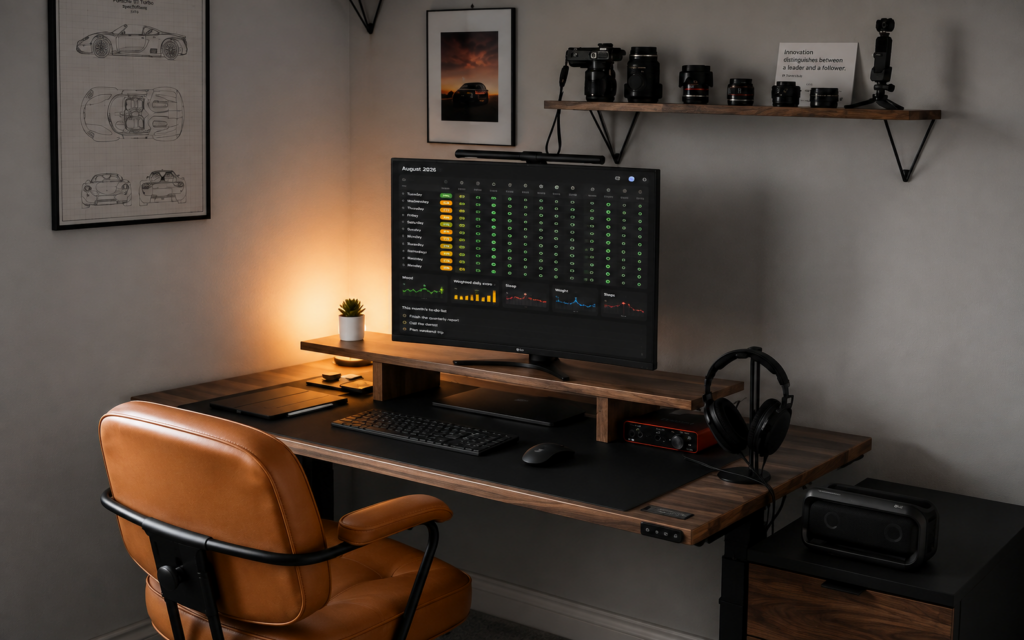
If you also want to become more intentional about your daily habits, you can try the same tool I’ve been using. Personal Habit Tracker lets you track daily habits, mood, sleep, weight, steps and your own custom metrics directly from Chrome. You can assign different importance to your habits, see a weighted daily score, follow your progress through charts and add small notes about your days. And importantly, your information stays on your computer.
No account. No cloud. No analytics. No tracking.
You can get Personal Habit Tracker from the Chrome Web Store:

My suggestion if you’re starting? Don’t track everything. Choose five or six habits that genuinely matter to your body, mind or future. Use the tracker for a month. Be honest with it. Don’t worry about perfect scores. At the end of the month, look at what actually happened. Then ask yourself:
What is one small change I can make next month that would improve my days?
Make that change. Track it. And keep going.